Blog

Should Gas Prices Affect What Car You Buy
gas pump
Several Americans are using the recent drop in gas prices as an excuse to buy an SUV or another less fuel efficient vehicle. In fact, in the second half of 2014, sales of larger vehicles have risen by more than ten percent while sales of smaller vehicles have fallen by just under ten percent. But when you look at gas prices in a historical context, this recent trend may not prove to be financially sound. The math that goes into the decision to buy a larger vehicle seems simple enough. Gas prices have dropped by roughly $1.30 per gallon over the past six months, which can mean an annual savings of anywhere from $600 to $1000 depending on how many miles you drive over the course of the year. That savings means the impact at the pump becomes less of a consumer priority. But, those savings are based on current prices, and don’t take into account how prices may fluctuate over the lifespan of the vehicle they are about to purchase. Before dropping fuel efficiency down the list of priorities in your next vehicle, it is important to consider two factors; the length of time you will have the vehicle and the amount of time it takes for gas prices to rise again. As reported on kbb.com, Polk Research shows that most Americans who purchased a new car within the last two years plan to keep it for at least 6 years. Also, a poll conducted by automd.com said that more than three quarters of Americans now keep their vehicles for more than a decade. Better manufacturing and longer manufacturers’ warranties have both contributed to this extended lifespan. So if people are keeping their cars longer, how long will they have to take advantage of lower fuel prices? According to gasbuddy.com, the last time prices fell below $2.00 per gallon was in December of 2008. By the summer of 2009, the price had already climbed back above $2.60 per gallon. It reached $3.00 per gallon in late 2010, and has stayed in the $3.25 - $4.00 range ever since. Chart Image Source: Gasbuddy.com That would mean that if history were to repeat itself, an SUV driver would spend roughly $600 less in the first six months than they would if gas were still at mid-summer 2014 prices. They would also spend about $700 less over the next twelve month period. After that, the perceived savings would completely evaporate, leaving you with a gas guzzling drain on your wallet for the next four and a half years. Also, before gas prices dropped in 2008, the average price for the previous four years was $2.50 - $3.00 per gallon. Following the dip in 2008, gas prices settled in at roughly $.75 - $1.00 higher than they had been from 2005 – 2008. If that were to happen again, it would mean that prices would be higher in two and a half years than they were in the summer of 2014, ranging anywhere from $3.75 - $4.50 per gallon. Another approach would be to double down on those savings by buying a Jetta. The Jetta’s 36 miles per gallon on the highway is twelve to fifteen miles per gallon more than most SUV’s, making them less susceptible to the fluctuations at the pump. While SUV drivers can point to how the temporary difference in price benefits their wallets, Jetta owners can point to an overall savings throughout the lifespan of the vehicle regardless of gas prices (see graphic). If the current dip in gas prices lasts longer than it did at the end of 2009, a fuel efficient vehicle like a Jetta still shows a savings at the pump. Though the gap does narrow, if prices were to hold at $2.00 per gallon for the next six years, Jetta owners would pay roughly $6258 for gas while the average SUV owner would shell out an estimated $9840. This is a savings of $3,582 in gas alone. With this sort of savings, isn't it time you learned a little more about the Jetta?
Recommended Posts

Volkswagen Baton Rouge

Baton Rouge Volkswagen Atlas Dealer: What’s New in 2018?

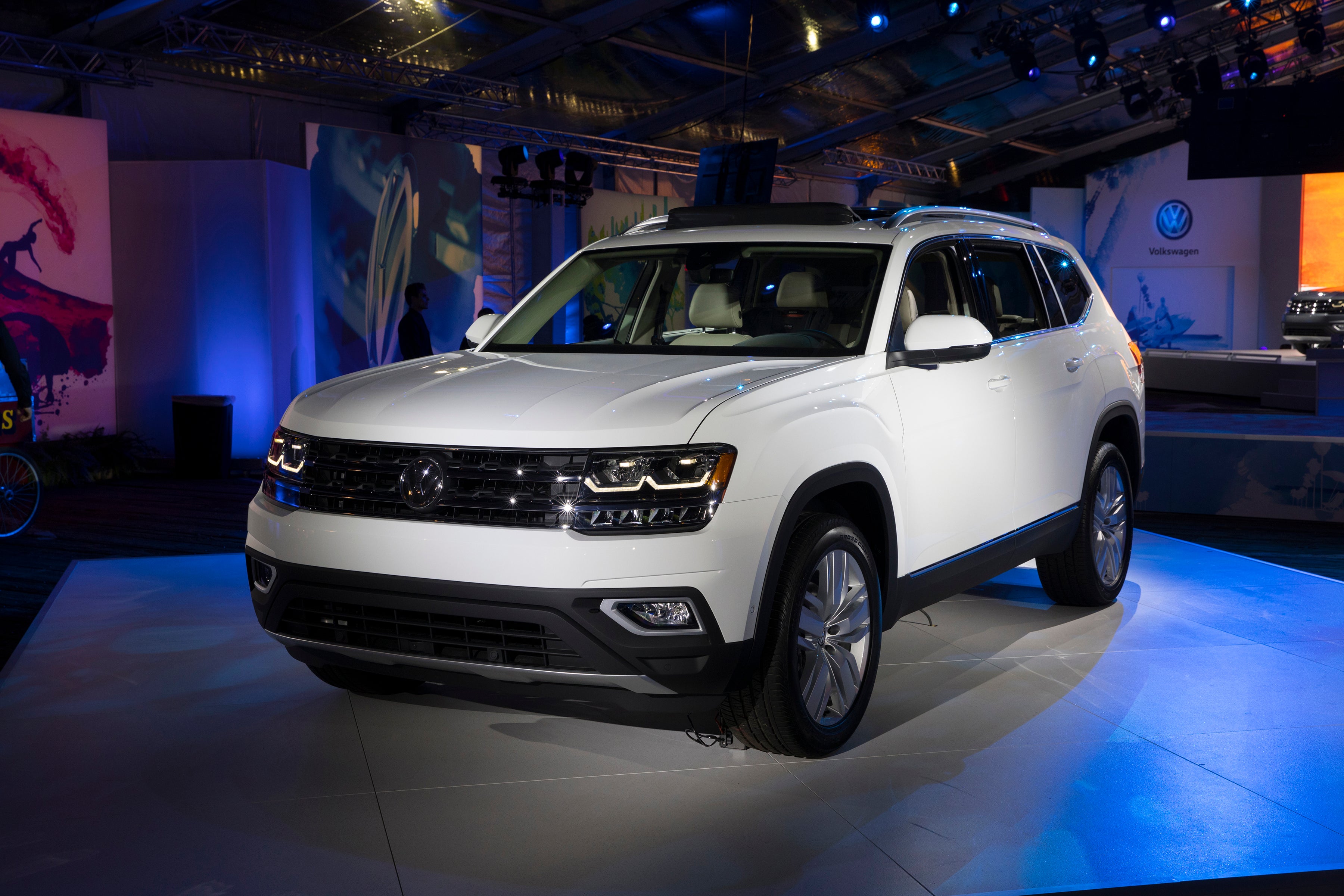
The Volkswagen Atlas had one of the most anticipated debuts of last year.  This is VW’s newest SUV model and its first three of the three-row variety.  So what can we expect now that 2018 has arrived and the new Atlas is on the road? more The 2018 Volkswagen Atlas plenty of space.  Seven seats are standard, with a second-row bench, and a two-place third row.  However later this year, for an additional $625, you’ll have the option to have 2 captain’s chairs in the middle row.  With 21 cubic feet of space, there is also plenty of room for cargo. The Atlas also features a 3.6 liter, narrow-angle V6.  This engine provides 276 horsepower and 266 lb-ft. of torque.  This larger engine gets 19 mpg in the city and 24 on the highway.  Later this year a smaller, 2.0 liter, turbocharged option will be available as well. The top trim package for the new Atlas has some luxurious features, including: Adaptive cruise control 360-degree camera system Remote start 3 zone climate control Fender-branded audio system 8-inch touchscreen infotainment system with Apple Play Visit the experts at Southpoint Volkswagen in Baton Rouge and test drive the all-new Atlas.

vw-beetle-dune-0

Baton Rouge VW Beetle Dealer: What’s New for 2018?

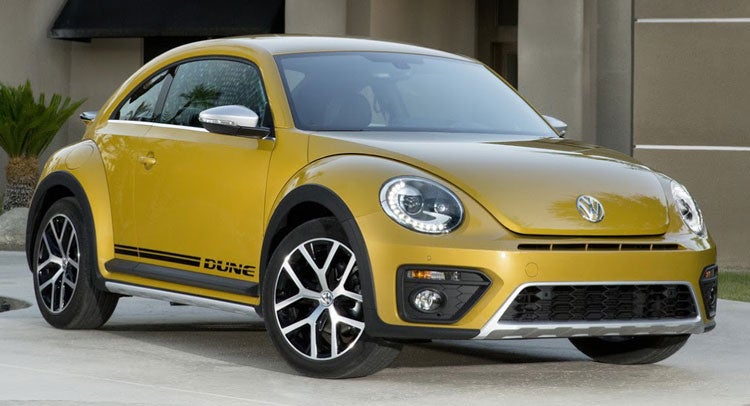
Every year the calendar returns with things we’ve enjoyed from the past, just with a new twist.  Whether it’s the sequel to a movie, the new season of your favorite show, or your favorite annual event; it will be familiar, yet new, and likely improved.  The 2018 VW Beetle i s the same way.  This iconic car from Volkswagen is a favorite and never fails to reinvent and refresh itself every year.  So what exactly is new for the Beetle in 2018? more New Engine This year’s Beetle features a new 2.0 liter, four-cylinder, turbocharged, direct injection TSI® engine, providing even more horsepower, up to 174hp.  Volkswagen’s automatic Tiptronic® transmission also comes standard. Trim Line Updates Beetle S:  The VW Beetle S offers the option of the new Style and Comfort Package, which includes: 6.3” Composition Media touchscreen infotainment display, keyless access and push-button start, heated seats, and more. Beetle SE:  This year the Beetle SE has some added standard features, such as Climatronic® dual-zone automatic climate control, exterior chrome trim, panoramic sunroof, and blind spot monitoring. Beetle Coast:  This brand new model is stylistically inspired by the ocean.  Based on the S, the Beetle Coast comes standard with a surfboard wood-look dash pad and has an exclusive new color option, Deep Sea Teal.  The Coast also features scuff plates, blind spot monitoring, a sunroof, and Rear Traffic Alert. Beetle Dune: The Beetle Dune is the heritage-inspired icon that has some new additions.  Bi-Xenon headlights, LED daytime running lights, Climatronic dual-zone automatic climate control, a panoramic sunroof, and more. Volkswagen’s People First Warranty This is a new six-year, or 72,000 miles, bumper-to-bumper warranty that can be transferred to subsequent owners. So whether you’re considering a VW Beetle for the first time, or looking to upgrade to the newest model, the experts at Southpoint Volkswagen are ready to answer questions and get you on the road.

fuel efficiency

Increased Fuel Efficiency: Get Your Volkswagen around Baton Rouge with Less Gas

Stopping for fuel is one of the necessary evils driving.  It can be a hassle, especially when you’re traveling.  You have to find an exit with a gas station, navigate your way off of the interstate, through service roads, and negotiate crowded pumps in foreign places.  Then after the pain in the neck to get there comes the pain in the wallet.  Wouldn’t it be great if your gas station visits were few and far between?  Well with Volkswagen’s line of fuel-efficient vehicles and few driving tips you can avoid the gas pump for quite a while. more VW’s most efficient model is the Jetta, specifically the 2017 5-speed.  This car boasts a 40 mpg rating on the highway, and 33 mpg combined.  The Volkswagen Golf also offers a combined rating of 29 mpg, 36 mpg on the highway.  Here’s a closer look at the combined fuel efficiency of VW’s other models: Beetle: 28 mpg CC: 25 mpg GTI: 28 mpg Passat: 27 mpg Tiguan: 22 mpg Now that we’ve seen the benefits that VW offers from a fuel efficiency standpoint, what are some other ways you can enhance the life of your gas tank? Properly inflate tires: When your tires are underinflated it can hurt your fuel economy.  It also compromises your handling and braking which can also shorten the life of your tires. Drive with a warm engine: When your engine is warm it works much more efficiently. Use cruise control: Cruise control helps your engine maintain a steady, efficient pace. Make smooth starts and stops: Fast acceleration and hard braking all take their toll on your gas mileage.  These actions make your engine work harder, thus using more fuel. So whether you are making a long trip this holiday season, or looking to pass the gas station more often, these tips can help, and driving an efficient vehicle like a Volkswagen makes it even easier.  The experts at Southpoint Volkswagen are ready to answer questions and get you on the road.