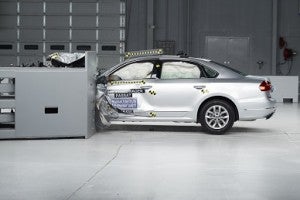

There are times where a car can go from one model year to the next with few, if any, noticeable changes. But, from time to time, car makers decide it is time to raise the bar. That is exactly what Volkswagen did in moving from the 2015 to the 2016 Passat. When taking a look at what is new with the new Passat, we found quite a bit worth sharing. The 2016 Passat offers new styling inside and out as well as a host of new connectivity and driver assistance features. Let’s start with the exterior design. The 2016 Passat is far more aggressive than the 2015. It features a new hood, front fenders, grille, front and rear bumpers, trunklid and available LED headlights and taillights. Volkswagen’s head of design, Klaus Bischoff said the new design gives the car, “a dynamic presence and a more sophisticated look.” More specifically, slimmer headlights, a more substantial four-bar grille, and the muscular, domed hood all work together to give the Passat a wider, more planted stance from the front. There are some noticeable changes to the interior of the 2016 Passat as well, all with the intent of presenting a more sophisticated look and feel. The description from Volksagen USA tells us, “a new instrument panel features two large gauges and the center stack incorporates VW’s latest MIB II infotainment system. The interior also features upgraded materials, a new steering wheel and column stalk design, two-tone décor panels, and refined chrome and piano black trim. Heatable rear seats are a new available feature, along with Easy-Open keyless access that opens the trunk via moving a foot near the rear of the vehicle.” Technology upgrades are where the 2016 Passat truly raises the bar as it features Volkswagen’s second-generation “modular infotainment platform”, also known as MIB II. The system features touchscreens as standard equipment on all models. On most models, the display utilizes a capacitive touch sensor (similar to smartphone and tablet technology) enabling gesture controls like swiping and pinch-zooming rather than the resistive touchscreens that require pressure and have slightly longer response times. Most MIB II units also feature a proximity sensor, which detects when a hand is nearby and automatically switches its display to allow easier selection of specific features. USB and Bluetooth® connectivity are standard on all 2016 Passat models. The MIB II system also serves as the foundation for the available Volkswagen Car-Net® system, one of the most comprehensive suites of connected vehicle services and features available in the automotive industry today. VW Car-Net includes App-Connect technology, featuring the three major smartphone integration platforms—Apple CarPlay®, Android Auto™ and MirrorLink®. This allows seamless integration with the vast majority of smartphones available today. Since Volkswagen has a reputation for putting safety at the forefront, the 2016 Passat has numerous features that help live up to that reputation. It features, the automatic post-collision braking system, which applies the brakes after a primary collision in anticipation of a secondary collision, since most accidents are rarely a single, instantaneous event. Also standard on all Passats is a rearview camera. Adaptive cruise control, forward collision warning, blind spot monitor, rear traffic alert, lane assist, and park assist are available on most, but not all Passat models.