Blog

All Baton Rouge Volkswagen Dealer Baton Rouge Volkswagen Service Financing
2016 jetta

The 2016 Jetta: adding power without sacrificing fuel efficiency

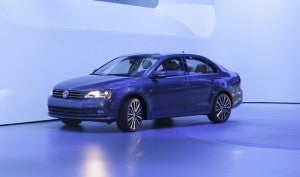
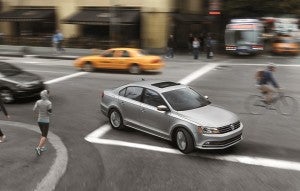
One of the trade-offs in shopping for a new car is power versus fuel efficiency. Traditionally, if you want more power, you have to sacrifice miles per gallon to get it. That is not the case with the 2016 Jetta as Volkswagen is adding power without sacrificing fuel efficiency. The new Volkswagen Jetta is taking the next steps in performance upgrades, and they are doing so by making a major change under the hood. With the 2016 Jetta, Volkswagen is moving from a naturally aspirated engine to a turbocharged injection engine. more Why does this make a difference in either the horsepower or fuel efficiency? To understand that, we should probably give some rudimentary background on the difference between the two types of engines. All internal combustion engines mix fuel with air in order to operate. A naturally aspirating engine uses its pistons to pump air into its cylinders as the catalyst for combustion. This is a very reliable way of doing things, but can also be inefficient. And, the more power you want, the less efficient it becomes. The turbocharged engine, or forced induction engine, uses multiple compressors to affect the temperature and density of the air inside the engine; creating a greater pressure that benefits the amount of energy created by the fuel that is injected. This, simultaneously, gives a smaller capacity engine both greater power and greater fuel efficiency. A turbocharged engine is, by and large, more efficient than a naturally aspirating engine. So why would anyone opt for a naturally aspirating engine? Historically, the answer to that has been that it is a simpler engine, and the simpler the engine, the cheaper it can be built and the less likely that something can break or malfunction. Tradition and necessity factor into that as well. The turbocharged engine was used very early on in airplanes and some people just didn’t feel like they needed that technology under their hood. There are also people that have always relied on a naturally aspirating engine and have never felt the need to change. However, turbocharged and supercharged engines advance by leaps and bounds every year. Their reliability is just about on par with the naturally aspirating engine. Which means that motorists can enjoy enhanced power coupled with better fuel efficiency. While gas prices have dipped in recent months, traditionally, their fluctuation means that they will rise again within the life span of your next vehicle purchase. With this in mind, Volkswagen has replaced their 2.0L, naturally aspirated four cylinder engine with a new 1.4L four cylinder direct injection TSI engine. The new engine provides 150 horse power. It also improves its highway gas mileage by 13% up to 39mpg. Joerg Sommer, Vice President, Product Marketing and Strategy, Volkswagen of America told Kelley Blue Book, "Volkswagen leads the industry with implementation of these engines in North America and we are excited that we are furthering our leadership with the introduction of the latest-generation EA211 engine in the Jetta." The change to the Jetta and other Volkswagen models for 2016 brings engine downsizing to more than 97 percent of vehicles it currently sells in the U.S. as part of an overall move toward a more efficient driving experience. *photo from Kelley Blue Book
volkswagen golf

Going Golf means Going Green

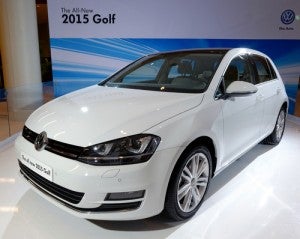
2015 has already been a great year for Volkswagen’s Golf family of vehicles. They were named as Motor Trend’s car of the year to start the year. Now, the Golf GTE has won a Techie award in the Green category. In their praise of the GTE, the folks at BusinessCar emphasized how Volkswagen is “normalizing” the hybrid, which suggests that going Golf means going green. The “Techies” are BusinessCar Magazine’s fleet awards. They have been around for seven years and are the only industry awards that reward the use of technology to make fleet operations cleaner, safer and easier. The “Techies” are judged, not only by BusinessCar’s editorial panel, but they get help from more According to BusinessCar’s website, the Volkswagen GTE was given the Green Development award because of the “normalcy” of the car. While other hybrids are struggling to keep up performance-wise, the Golf GTE excels. From their website: With a 148hp turbocharged 1.4-litre petrol engine under the bonnet allied with an electric motor - which brings total power up to 201hp - performance is sprightly enough for Volkswagen to brand it as "like a GTI but greener". Meanwhile, owners won't have to worry about running out of charge thanks to the pairing of petrol and electric power, which also lets the GTE travel up to 31 miles on electric power alone at speeds of up to 81mph. The company continues: "It's this utter normality that makes the Golf GTE stand out from the crowd of other eco-friendly and electric products. In terms of appearance, it's a Golf. In terms of practicality, it's a Golf. In terms of driveability and servicing, it's a normal Golf." Paul Barker, BusinessCar’s editor, and one of the judges on the panel said, “Volkswagen has taken a huge step towards normalising ultra-low emission vehicles with the introduction of the GTE, a Golf that sits alongside its siblings in practicality, price and performance terms.” While the Volkswagen GTE was released in the UK earlier this year, its ability to apply green technology without sacrificing performance is emblematic of the Volkswagen name. In fact, Volkswagen’s Head of Fleet, Michael O’Shea told the VWVortex blog, “The Golf GTE represents a significant milestone in Volkswagen technology and I’m delighted that this has been recognised with this award. We know that buyers want to combine exceptional economy and emissions with the performance and proven quality that Volkswagen delivers – the Golf GTE proves that you really can have the best of both worlds.”

passat

5 reasons to graduate from a Jetta to a Passat

You’ve already been introduced to the Volkswagen family, but is it time to move from the Jetta to the Passat? If you own or lease a Volkswagen Jetta, you already know about the comfort, safety, functionality, and fun of driving a Volkswagen. But, what about the other Volkswagen models? Is there more to discover, more to learn or more to experience from Volkswagen? The short answer is yes. You’ve already been introduced to the Volkswagen family, but is it time to move from the Jetta to the Passat? In order to help answer that question, we have compiled a list of 5 reasons to graduate from a Jetta to a Passat. more Roomier cabin – The cabin of the Passat seats five adults comfortably. According to the manufacturer’s published data it also offers the best rear leg room in its class. More horsepower – While the Jetta is certainly not lacking in horsepower, offering 170 horsepower from its 1.8L TSI engine; the Passat allows for the next level. The Passat has the option of a 3.6L V6 engine, which ups the horsepower to 280. (That’s right! A V6 in a sedan.) Interior features – You already know the creature comforts that come with the Jetta, but the Passat takes interior features to the next level. While the Jetta offers 6-way manually adjustable front seats and power adjust on the driver’s seat; the Passat carries the option of 8-way adjustable, including lumbar support and memory for the driver’s seat. The Jetta offers ambient lighting in the front seat. The Passat adds the option of that same lighting in the back seat. The Jetta has a three spoke multi-function steering wheel. The Passat adds a height adjustment option with a telescopic steering column. As a bonus, a leather wrapped steering wheel and gear shift knob are available with the V6. The Volkswagen Passat also features steering wheel mounted Tiptronic paddle shifters, illuminated vanity mirrors, and an automatic door locking feature when the car reaches eight miles per hour. More room for storage – We all know that as our needs in life change, every change inevitably means more “stuff” becomes a necessity. The Passat has adapted to those needs both in the cabin and in the trunk. In the cabin, the Passat has a driver’s side glove box. It also has an integrated storage box in the center front arm rest and the center rear arm rest. The cargo space (a.k.a. the trunk) can handle strollers, enough luggage for a family vacation, or anything else you can dream up to fill the 15.9 cu. ft. available. No compromising on the “fun” stuff – More often than not, moving from one phase of life to the next means sacrificing a level of fun that accompanied the former. When you move from a convertible sports car to a sedan you lose the wind in your hair carefree attitude that went with the convertible. This is not the case when you move from a Jetta to a Passat. All of the fun features of the Jetta make the move with you. The touchscreen sound system with MP3 and WMA-compatible in dash CD player and AM/FM radio is available in the Passat. The Bluetooth streaming capabilities make the move to the Passat. The Fender audio system, the Car-Net connectivity, the keyless access, push button start, media device interface, I-pod cable, Homelink garage door opener, and three month trial subscription to Sirius/XM are all available when you graduate to the Passat. You can learn about all the other features of the Passat by visiting our website. You can also do a side by side comparison of the Passat and Jetta by visiting the dealership at 13940 Airline Highway.

gas prices

Baton Rouge gas prices fluctuate. Fuel efficiency remains constant.

This January, gas prices in Baton Rouge, and all across the country, were as low as they have been in seven years. But now it appears that they are about to trend upward again. Also in the second half of 2014, the number of SUVs and larger, less fuel efficient vehicles rose by ten percent. Experts believe that the drastic drop in gas prices was the cause for the uptick in sales. The reasoning was, “the lower the price at the pump, the lower fuel efficiency ranked in priority when shopping for a new vehicle.” more Now, gas prices are starting to climb again. In the last month and a half, they have jumped anywhere from $.20 to $.50 per gallon, depending on where you are. This jump has left some motorists with sticker shock. According to GasBuddy’s senior petroleum analyst Patrick Dehaan, "The spring spike has hit pumps across the nation, and it certainly has motorists wonder what in the heck is going on." Experts are predicting that this trend will continue through at least May:   Interestingly, those same experts predict diesel prices will be comparable, if not lower than gas throughout this year.   What does this mean for the average motorist? It means that while Baton Rouge gas prices fluctuate, fuel efficiency remains constant. If this projection plays out, the price at the pump combined with the miles per gallon of a diesel would make Volkswagen’s Passat TDI and Jetta TDI very desirable options when shopping for a new vehicle.

tdi

What does TDI mean?

You have seen the advertisements for the Passat TD I and the Jetta TDI, and you may ask yourself, “what does TDI mean?” The short answer is: Turbocharged Direct Injection, but what is that and what does it do? Diesel engines became popular in the 1970’s when gas was at a premium and consumers sought an alternative. But, the diesel engines of the time were described as loud, lumbering, and dirty. Often times, motorists would find their cars covered in black soot from driving a diesel. Diesel engines also presented problems starting in cold weather and problems with quick acceleration. more Today, the diesel engine has made great strides to, not only survive, but thrive in the hybrid era. The industry as a whole has worked to virtually eliminate the key pollutants associated with on-road diesel engines. According to a report from the Diesel Technology Forum, “Particulate matter emissions of new on-highway diesel engines have been reduced 83% since 1988. Emissions of nitrogen oxides have been reduced by 63% during the same time period. This has been accomplished largely through improvements in fuel delivery, the design of combustion chambers, and turbocharging.” According to the website How Stuff Works, “Direct injection devices are now controlled by advanced computers that monitor fuel combustion, increasing efficiency and reducing emissions. Better-refined diesel fuels such as ultra low sulfur diesel (ULSD) will lower the amount of harmful emissions and upgrading engines to make them compatible with cleaner fuel is becoming a simpler process. Other technologies such as CRT particulate filters and catalytic converters burn soot and reduce particulate matter, carbon monoxide and hydrocarbons by as much as 90 percent.” Volkswagen’s Turbocharged Direct Injection combines increased power with increased fuel economy. How? Volkswagen’s technology page explains it this way: “Fuel needs oxygen to burn and the engine has to be supplied with huge quantities of air to get enough. You can solve this problem with a bigger engine - or you can solve it with a turbocharger - as in the TDI. Driven by the exhaust gases, it squeezes air more tightly into the cylinders.” “After being drawn through the turbocharger the air is then cooled by passing it through an air to air intercooler (cool air takes up less space than hot air), before entering the combustion chamber where diesel is injected directly into the cylinders at very high pressure through a nozzle. It's this intensive mixing of highly atomised fuel with the cooled compressed air that leads to better, more efficient combustion.” "The pressure at which the diesel is injected into the cylinder is the key factor in diesel direct injection. The fuel has to mix swiftly with the compressed air in the cylinder. The higher the pressure, the more finely the diesel is atomised for an intensive mixing of the fuel and air particles. This, in turn, leads to better and more efficient fuel burning. The energy from the fuel is used more effectively and emissions are reduced." The translation on the road is that Volkswagen’s TDI engines provide better fuel economy, less time spent at the gas pump, and lower overall maintenance costs as well.

gti stick

Volkswagen’s GTI: here to serve the automotive purist

If you’re a baseball purist, you probably hate the designated hitter. A music purist likely prefers vinyl. As for the automotive purist, there’s an affinity for the manual transmission. However, year after year, it’s getting tougher for the automotive purist to find the stick shift that connects them to their car. According to U.S. News, the number of cars that offer a manual transmission has dropped from 25% to under 3% in the last 20 years. Why has this been the trend? Both Road and Track and fix.com have recently looked the reasons behind carmakers putting all their eggs in the automatic basket. The two main reasons behind the move to the automatic are that they are easier to drive and the fuel efficiency of the automatic has greatly improved. more Manual transmissions used to be far more fuel efficient than automatic transmissions. But, as the popularity has increased in the automatic, the fuel efficiency has improved. Within the last three years, three different cars that offer both manual and automatic models show that their automatic models are within one mile per gallon of their manual models. That means convenience in driving moves to the forefront, and the automatic transmission takes the advantage because it is just plain easier to drive. Manual transmissions take effort to learn how to drive, and anyone who has ever driven a stick shift knows all too well of the feeling when you let the clutch out too quickly, the car lurches and you’re sitting at a green light hoping no one saw it while you restart the car. In their look at the shift in shifting, fix.com notes that the drop in cars manufactured with a manual transmission, naturally corresponds with a drop in the percentage of cars sold with a manual transmission. Graphic source: fix.com In fact, the move towards the automatic transmission has been so widespread that the manual transmission has actually proven to be a theft deterrent. On at least one occasion, an attempted carjacking came to a literal and figurative halt when the would-be carjacker couldn’t drive a stick. In spite of the popularity wave of the automatic transmission, don’t think for a second that the manual transmission purist is about to fade away. There is no shortage of articles, columns, and blogs touting the benefits of the manual transmission. The automotive blog site jalopnik.com has a few great contributions to why the manual transmission is not going extinct. “The manual transmission has become one of things we hold dear to our hearts, not because it is technically superior, but because for us it's just right” is the opinion of Vincente Esteve on oppositelock. Esteve touts the point of view that driving a manual transmission just feels better to him than an automatic does. Esteve, who drives a Volkswagen, notes that makers of manual transmission vehicles have made it a point to insure that things like a lighter, smoother clutch have helped increase the ease of driving a stick. Esteve isn’t the only one. Other writers have noted that driving with a manual transmission keeps the driver more engaged with what they’re doing, gives them a better feel for the road, and reduces distractions (you can’t text and shift simultaneously). There’s also the matter of cost, as the manual transmission tends to be less expensive than its automatic counterpart. Volkswagen’s GTI remains one of the favorites among the automotive purists. For the last decade, the GTI has been offered as either a manual transmission or without the third pedal as a dual clutch or DSG (direct shift gearbox). In that time, the popularity of the manual GTI has not dropped off versus the DSG. In fact, just two years ago, the number of GTI’s sold with a manual transmission was about 500 over the average for the last thirty years. If you want to get away from the car and look at the driver (and have a little fun), another blog at jalopnik.com contrasts the demographics of manual drivers versus automatic drivers and they cite some pretty extensive research done by hunch.com: Graphic source: hunch.com

app-connect_4477

CES: How Volkswagen is keeping up with your mobile world

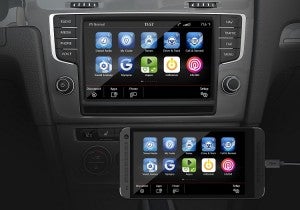
It should come as no surprise that Americans are becoming more dependent on their smart phones. That is not merely perception, it is reality and statistics back it up. According to Flurry Analytics (owned by Yahoo), people spend an average of two hours and fifty seven minutes a day on their smartphone or tablet. That number has increased by more than sixty percent over the last two years. If you were to add the number of hours per day over the course of an entire year, the average American spends 45.6 days on their smart device. In fact, the third quarter of 2014 marked the first time that people spent more time on their smart devices than they did watching television. more Source: Flurry Analytics Rather than shy away from the growing role smart devices play in our day to day lives, Volkswagen took to the stage at the 2015 Consumer Electronics Show in Las Vegas to announce new technologies that will be integrated in their vehicles that will not only embrace this trend, but more importantly will make using them safer. Presenting at CES, Dr. Volkmar Tanneberger, the head of Volkswagen’s electronic development division, reminded everyone that his company has led the way when it comes to embracing technology that facilitates safer use of smartphone technology. He said, “We have been using touch screen since the beginning, because it represents the most intuitive way to operate in car technology.” Two different members of Volkswagen’s Golf family were used to demonstrate during the presentation. Volkswagen said in a news release, “It has now been eight years, to the month, since Apple® introduced its first generation iPhone in San Francisco. Smartphones have irreversibly changed our everyday lives, from the ways we communicate to how we access information. It has long been normal practice to have phones automatically connected to a car's hands-free telephone system via Bluetooth and to have smartphones stream media libraries into car infotainment and sound systems. But now, Volkswagen is taking a significant step forward. “ In that same release they said, “Later this year, VW will introduce the second generation "modular infotainment platform" (MIB II) in the United States. Along with the new infotainment system, MirrorLink™ will also be made available for the first time, integrating the apps and operating layout of numerous smartphones (including Samsung, HTC, LG and Sony) into cars.” Tannenberger made the same case in his presentation saying, “This technology seamlessly integrates everyday devices like smart phones, smart watches, tablets, and the like with the vehicle.” More importantly, he talked about these advancements, not from a convenience perspective, but from a safety perspective. Tanneberger said, “In combination with our proximity sensors from our new info-tainment system, driver distraction will reduce even further.” Tanneberger also stressed that Volkswagen is not playing favorites with any particular phone or operating system. As described in the release, “When MirrorLink™ is introduced, two other interfaces will also be launched under the App-Connect label: CarPlay™ (Apple®) and Android Auto™ (Google®). Simultaneously, VW will also launch CarPlay™ and Android Auto™ in the European market.”

2015 Jetta

Reviews: What others are saying about the 2015 Volkswagen Jetta

The 2015 Volkswagen Jetta added many new features, changed up the exterior, and of course, continues to bring you the German engineering that comes with every Volkswagen. In describing the 2015 models, vw.com said, “Strong, solid, and well-built, the new Jetta has been engineered and designed to give you a little more confidence along with a great drive.” But, we wanted to take a look at what others are saying about the 2015 Volkswagen Jetta? We take a look at some reviews from industry experts. more While Volkswagens, and Jettas in particular have been known for their engineering and safety, Steve Siler from Car and Driver decided another factor was worthy of his lead. Siler said, “Rowing through the gears of a 2015 Volkswagen Jetta S TDI’s six-speed manual transmission as we roll along the scenic two-laners of Virginia’s horse country, we marvel at the fact that we’re actually having fun. Yeah, fun. In a Jetta.” Siler then proceeded to talk about the growth of the Jetta since its introduction in 2011, and while he may be harsh in his assessment of previous efforts, he clearly likes where Volkswagen has taken this car. Siler said, “It seems that the Jetta has now become the car Volkswagen should have been building since the beginning.” Motor Trend, who recently named the 2015 Volkswagen Golf as their “car of the year,” also had an unexpected lead. They decided to talk numbers. Scott Burgess wrote, “Forget the Passat -- for Volkswagen, the Jetta defines the automaker in the U.S. This year, one out of every four vehicles sold by Volkswagen in America is a Jetta, which has outsold the Beetle, CC, Golf, Touareg, and Tiguan combined.” Burgess was also complimentary of what happens when you hit the gas pedal. He wrote, “The volume turbocharged 1.8-liter engine mated to a six-speed automatic was an absolute thrill to drive. It felt well balanced through sharp corners. Its acceleration felt quick and the shifts always seem nearly perfectly timed, whether in normal driving mode or Sport mode.” John Voelcker from the Car Connection took note of the variety of Jettas available. He wrote, “The Jetta offers a multitude of powertrains, not only gasoline and diesel, but also a low-volume hybrid version. Their range lets the VW sedan be many things to many different buyers, though it has a lot of ground to cover. It must squeeze in what might be the most usable amount of interior space in the compact class; deliver an impressive sweet spot of performance, refinement, and fuel economy; and pack in plenty of features, all while keeping the price point in the mid-$20,000 range. Somehow, the Jetta seems to accomplish all of that, and its sales reflect that success." One of the aspects that Voelcker felt was a strength for the Jetta was fuel efficiency. Giving the Jetta a 9 out of 10 in the category, Voelcker praised the TDI and hybrid. “The hybrid 1.4-liter four-cylinder engine and seven-speed dual-clutch transmission put it at a sky-high 45 mpg combined, just 10 percent lower than the much less entertaining Toyota Prius.” Along with the written reviews, Emme Hall with The Fast Lane Car takes us for the ride with her as she checks out the 2015 Jetta.

paparazzi

5 celebrities who drive a Volkswagen

5 celebrities who drive a Volkswagen Volkswagen is “the people’s car” and apparently that doesn’t exclude some big names in Hollywood. And why should it? If reliability, comfort, and German engineering are good enough for you and me, why wouldn’t celebrities want the same thing? While many celebrities have cars that make a statement about their overwhelming wealth, we’ve stumbled across 5 celebrities who drive a Volkswagen. (Click on their names for the pics or articles) more 1. Heidi Klum and her Beetle – It’s no “secret” that th is German model loves German engineering. The Classic Beetle was in its hey-day when Klum was a child, and was built less than three hours from her home. But this should come as no surprise. Klum has thought German engineering is sexy for a while now: 2. Sylvester Stallone and his Phaeton - This blogger mixes up a Phaeton with a Jetta (not sure how). While the Phaeton and Jetta don’t exactly fall in the same price range (the Phaeton isn’t readily available in the US and starts at around $65,000), Rocky Balboa aka Lt. Raymond Tango puts his trust in the VW logo. 3. Mark Zuckerberg and his GTI – The Facebook founder made quite the splash to kick-off 2014 when he told the Wall Street Journal that his “whip” was 2014 GTI. That’s right, he’s worth $20 billion and his car costs $30,000. BTW, if you want to completely emulate Zuckerberg, you can get a VW hoodie to go w/ the GTI. 4. Penelope Cruz in her Jetta – Paparazzi love getting pictures of celebrities with their “baby bump.” But sometimes, what’s in the background can attract as much attention as what’s in the foreground (at least for us it did). According to the website celebrity riches, the star of Vanilla Sky drives a Volkswagen Jetta. 5. Jennifer Lawrence in her EOS – There aren’t many names in Hollywood hotter than Jennifer Lawrence right now. Lawrence saw a pay bump from half a million dollars for the first Hunger Games film to $10 million for the sequels. That being said, Katniss still cruises in a Volkswagen Eos. Bonus: Bill Engvall goes retro in his VW van - This makes perfect sense. Since Volkswagen is "the people's car," it would stand to reason that it would be a perfect fit for a star of the Blue Collar Comedy Tour.

gas pump

Should Gas Prices Affect What Car You Buy

Several Americans are using the recent drop in gas prices as an excuse to buy an SUV or another less fuel efficient vehicle. In fact, in the second half of 2014, sales of larger vehicles have risen by more than ten percent while sales of smaller vehicles have fallen by just under ten percent. But when you look at gas prices in a historical context, this recent trend may not prove to be financially sound. The math that goes into the decision to buy a larger vehicle seems simple enough. Gas prices have dropped by roughly $1.30 per gallon over the past six months, which can mean an annual savings of anywhere from $600 to $1000 depending on how many miles you drive over the course of the year. That savings means the impact at the pump becomes less of a consumer priority. more But, those savings are based on current prices, and don’t take into account how prices may fluctuate over the lifespan of the vehicle they are about to purchase. Before dropping fuel efficiency down the list of priorities in your next vehicle, it is important to consider two factors; the length of time you will have the vehicle and the amount of time it takes for gas prices to rise again. As reported on kbb.com, Polk Research shows that most Americans who purchased a new car within the last two years plan to keep it for at least 6 years. Also, a poll conducted by automd.com said that more than three quarters of Americans now keep their vehicles for more than a decade. Better manufacturing and longer manufacturers’ warranties have both contributed to this extended lifespan. So if people are keeping their cars longer, how long will they have to take advantage of lower fuel prices? According to gasbuddy.com, the last time prices fell below $2.00 per gallon was in December of 2008. By the summer of 2009, the price had already climbed back above $2.60 per gallon. It reached $3.00 per gallon in late 2010, and has stayed in the $3.25 - $4.00 range ever since. Chart Image Source: Gasbuddy.com That would mean that if history were to repeat itself, an SUV driver would spend roughly $600 less in the first six months than they would if gas were still at mid-summer 2014 prices. They would also spend about $700 less over the next twelve month period. After that, the perceived savings would completely evaporate, leaving you with a gas guzzling drain on your wallet for the next four and a half years. Also, before gas prices dropped in 2008, the average price for the previous four years was $2.50 - $3.00 per gallon. Following the dip in 2008, gas prices settled in at roughly $.75 - $1.00 higher than they had been from 2005 – 2008. If that were to happen again, it would mean that prices would be higher in two and a half years than they were in the summer of 2014, ranging anywhere from $3.75 - $4.50 per gallon. Another approach would be to double down on those savings by buying a Jetta. The Jetta’s 36 miles per gallon on the highway is twelve to fifteen miles per gallon more than most SUV’s, making them less susceptible to the fluctuations at the pump. While SUV drivers can point to how the temporary difference in price benefits their wallets, Jetta owners can point to an overall savings throughout the lifespan of the vehicle regardless of gas prices (see graphic). If the current dip in gas prices lasts longer than it did at the end of 2009, a fuel efficient vehicle like a Jetta still shows a savings at the pump. Though the gap does narrow, if prices were to hold at $2.00 per gallon for the next six years, Jetta owners would pay roughly $6258 for gas while the average SUV owner would shell out an estimated $9840. This is a savings of $3,582 in gas alone. With this sort of savings, isn't it time you learned a little more about the Jetta?

remote key

Troubleshooting: What to do when your Volkswagen remote control vehicle key

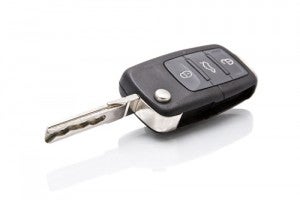
Your Volkswagen remote control vehicle key should be able to lock and unlock your vehicle’s doors from within a perimeter of several yards around the vehicle. If, however, it does not, it could be one of a few different issues. Your Volkswagen remote control vehicle key may have a dead battery. It is very easy to test to see if this is the case. If you press a button on the remote control vehicle key, an indicator light should flash once. If you press and hold a button on the remote control vehicle key, the indicator light should flash repeatedly. If it does not, your battery is dead. more While you can change the battery yourself, Volkswagen recommends that you allow an authorized Volkswagen service facilit y to do it for you because improperly replacing the battery or replacing with the wrong battery can cause further damage to the remote control vehicle key, which can lead to further expenses for a problem with an easy fix. If you decide to replace the battery yourself, follow these steps: -          Unfold the key bit on the remote control vehicle key. -          Remove the cover on the back of the remote control vehicle key by first pulling back on the side of the folded in key bit. -          Use a thin object to pry the battery out of the battery compartment. -          Position the new battery into the battery compartment. -          Replace the cover, and press it down until you hear it click into place. If the battery is not the issue, your remote control vehicle key may need to be resynchronized. A remote control vehicle key can get out of synch when the buttons are pressed outside of operating range. To resynchronize the remote control vehicle key, follow these steps: -          Unfold the key bit on the remote control vehicle key. -          Remove the cap from the door handle on the driver door. -          While standing immediately next to the vehicle, press the unlock button on the remote control vehicle key. -          Manually unlock the vehicle using the key bit within 1 minute. -          Reinstall the cap. If your Volkswagen remote control vehicle key still doesn’t work, it may be a problem with the transmitter inside, and you will need to contact our service department to either have it fixed or replaced.

volkswagen golf

2015 Golf named Motor Trend’s Car of the Year

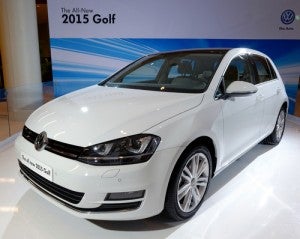
Described as a “Jackrabbit of all trades,” the 2015 Volkswagen Golf family has nabbed Motor Trend’s top honor of the year. Each year the magazine goes about finding the best vehicle of that year by looking at six different categories, advancement in design, engineering excellence, efficiency, safety, value and performance of intended function. The Volkswagen Golf beat out nine other finalists to be named Car of the Year for 2015. The finalists came from all different classes of vehicles. Four luxury vehicles were among the finalists; the Audi A3, the Hyundai Genesis, Maserati Ghibli and the Mercedes Benz C Class. There were three sporty vehicles in the running: the BMW 2 Series, the Ford Mustang, and the Lexus RC F. The Honda Fit was the lone finalist from the economy class. The Kia Sedona was the only minivan in the finals. more Here is what Motor Trend had to say about the Golf, broken down by each of the criteria they evaluated: Advancement in Design: “With crisply sculpted bodywork that's nearly an inch lower, two inches longer, and a half-inch wider than its predecessors, the new Golf looks sleeker and sportier than the car it replaces.” Efficiency: “Weight reduction and improved engine efficiency have resulted in fuel economy gains for both the TSI and GTI models.” In regards to the electric version they said, "With several electric vehicles present at this year's COTY event, the e-Golf was lauded for driving and feeling most like a 'normal' car." Engineering Excellence: "No matter which Golf variant we jumped into, we emerged with smiles on our faces. And while each obviously catered to different priorities, they all share the same solid build quality, taut structure, and remarkable ride that make them feel like a premium vehicle in an entry-level segment." Performance of Intended Function: "From eco-friendly tech lovers, to fuel misers, to canyon road carvers, to A-to-B commuters, our four variants excelled in their individual ways while still feeling similar. Better yet, each did this at a price point that belies its premium feel, a major Volkswagen brand goal." Safety: "The optional Driver Assistance Package, which includes a forward-collision warning system, along with ratings of Good in each of the Insurance Institute for Highway Safety's five crash levels (including the newly standardized small-overlap frontal test), earned it an IIHS Top Safety Pick + rating -- the highest possible." Value: "If a trend toward smaller vehicles has shown anything, it's that buyers want the same tech-laden features, the same build quality, and the same upscale design and feel of their larger cars in their smaller ones. The 2015 Volkswagen Golf is a quality car, a fun car, a grown-up car -- a C-segment vehicle that can instill pride of ownership without breaking the bank. And that's why it's the 2015 Motor Trend Car of the Year." The Golf isn’t the only Volkswagen to receive recent recognition from Motor Trend. In 2012, the Passat was named Car of the Year.

Contact Us

Fill out this form below and we'll contact you shortly
*Required Fields